
by ITadmin | Jan 8, 2026 | Blog
Penanaman Bambu di Mojokerto
Yayasan Bambu Lingkungan Lestari (YBLL) kembali melakukan kolaborasi bersama Pemerintah Kabupaten Mojokerto, Perumdam Mojopahit dan sejumlah organisasi pegiat lingkungan, antara lain Wahana Edukasi Harapan Semesta (WeHasta), Aliansi Air Majapawitra, dan Panti Vila Doa Yatim Sejahtera dalam aksi penanaman dan pembersihan sumber resapan air. Masyarakat setempat juga terlibat dalam aksi yang dilakukan di kawasan Sumber Jubel, Desa Kembangbelor, Kecamatan Pacet, Kabupaten Mojokerto, Selasa (30/12/2025).
Bupati Mojokerto Muhammad Al Barra menegaskan kegiatan reboisasi dan pembersihan sumur resapan ini merupakan bentuk kepedulian sosial pemerintah daerah dalam meningkatkan kualitas dan ketersediaan air bersih bagi masyarakat.
Penanaman difokuskan pada jenis tanaman yang memiliki kemampuan menyerap dan menyimpan air, seperti bambu. Ribuan bambu di tanam beserta tanaman lain seperti sukun, durian, mengkudu, dan sirsak di sekitar sumber mata air bersejarah tersebut.
Sisyantoko, selaku Koordinator Kegiatan Penanaman, mengatakan Sumber Jubel merupakan daerah sumber air vital yang telah dimanfaatkan sejak masa kolonial Belanda. Bahkan, pada tahun 1927, sumber air ini tercatat pernah mengaliri wilayah Sidoarjo, Jombang, hingga Surabaya. Namun, saat ini debit airnya telah mengalami penurunan.
“Saat ini debit airnya telah menurun cukup signifikan, dari semula sekitar 90 liter per detik menjadi hanya 42 liter per detik. Keberadaan sumber ini harus dijaga kelestariannya, terutama melalui penanaman pohon.” kata Sisyantoko.
Sementara itu, Al Barra mengatakan aksi tersebut merupakan alternatif atas penurunan debit karena konversi lahan dan pertumbuhan pemukiman yang terus meningkat. Penanaman ini menjadi aksi penting untuk pengembangan pengetahuan lokal dengan tujuan konservatif.
Peran bambu akan menjadi alternatif revitalisasi sumur resapan. Untuk itu ia menyampaikan keterlibatan dalam perawatan kolaboratif melalui konsep pentahelik atau hexahelik.
“Bibit yang sudah ditanam membutuhkan perawatan, dan sumur resapan yang telah dibersihkan juga harus dikontrol secara berkelanjutan. Tanpa perawatan, upaya ini tidak akan memberikan hasil maksimal,” terangnya.
Mewujudkan hal tersebut, Sahlan Junaedy perwakilan dari YBLL, turut memberikan edukasi lingkungan dan mengkapanyekan peran vital bambu sebagai penjaga lingkungan. Ia berharap melalui edukasi ini, peserta yang terlibat dapat menyebarluaskan kepada masyarakat dan generasi muda.
2ee17b55-6b91-45e2-ae47-8565fadf9ac1
65c72405-f000-4723-8845-7a45419e00e2
6cd4a9ec-b183-4da6-ac03-5e64aba90373
72d42991-3ad2-404d-8d08-a7679715d061
777e3ec7-d1d0-42c9-932a-841228edd519
958e593e-2875-46ea-9735-31425fb51fae
9f129fd8-42af-40a3-b85f-9f64a6735574
bde2728a-342d-4842-bf89-bb25eea16eda

by ITadmin | Jan 8, 2026 | Blog
PEMBANGUNAN RUANG INFORMASI & LITERASI BUDAYA
Yayasan Bambu Lingkungan Lestari (YBLL) kembali menunjukkan komitmennya dalam pengembangan Model Desa Edu-ekowisata di Desa Wogo bekerjasama dengan Yayasan Keanekaragaman Hayati (Kehati). Sasarannya adalah Kampung Adat Wogo, salah satu kampung adat etnis di Ngada yang terletak di Kecamatan Golewa, Kabupaten Ngada, Flores. Kampung ini juga dijadikan destinasi atau icon utama dari Desa Wogo.
Program yang dikerjakan menyasar peningkatan infrastruktur pendukung wisata yaitu pembangunan ruang informasi dan ruang literasi budaya yang di bangun tepat di Plataran Kampung Adat Desa Wogo. Tahap awal pembangunan sudah dikerjakan sejak bulan Oktober lalu, ditandai dengan pendistribusian material bangunan dan pembuatan sarana pendukung seperti meja, kursi, dan rak yang menjadikan bambu sebagai material dasar.
YBLL dan Kehati melihat adanya kebutuhan akan fasilitas pendukung di Kampung Adat Wogo. Tujuan dari program ini adalah mendukung literasi dan pengetahuan tentang budaya serta adat istiadat setempat, baik kepada warga lokal maupun wisatawan yang berkunjung. Saat ini ruangan tersebut sudah selesai di bangun. Seperti namanya, ruangan ini difungsikan sebagai tempat penyimpanan buku yang memuat tulisan tentang budaya daerah setempat.
“Proses ini berjalan aman dan kondusif, dengan dukungan penuh secara gotong-royong. Masyarakat setempat juga menyambut baik program ini”, ujar Maria Goreti Watu (Susi) Program Officer YBLL.
Keberhasilan ini merupakan salah satu contoh suksesnya gotong-royong yang melibatkan Masyarakat, Pokdarwis, dan Pemerintah Desa Wogo. Dengan berdirinya bangunan ini, masyarakat Kampung Adat Wogo menyaksikan lebih dari sekadar konstruksi fisik, mereka menyertai tumbuhnya harapan dari ruang yang difungsikan sebagai sumber pengetahuan tersebut.

by ITadmin | Jan 8, 2026 | Blog
Anugerah Srikandi Kompas TV
Sebuah kebanggaan bagi Yayasan Bambu Lingkungan Lestari (YBLL) karena sang ketua, Monica Tanuhandaru memperoleh penghargaan sebagai Srikandi Penggerak Sosial dari KompasTV pada Senin (15/12/2025) di Studio 1 Menara KompasTV, Jakarta.
Ajang penghargaan tahunan untuk tokoh perempuan inspiratif ini merupakan upaya memperingati Hari Ibu, yang jatuh pada 22 Desember, serta untuk memelihara ingatan kolektif atas Kongres Perempuan Pertama di Yogyakarta, 22-25 Desember 1928.
Monica Tanuhandaru memperoleh penghargaan dalam kategori Srikandi Penggerak Sosial bersama dua tokoh lainnya, Alissa Wahid dan Giwo Rubianto Wiyogo.
Terdapat 6 kategori penerima penghargaan, termasuk Lifetime Achievement Award, yang dianugerahkan kepada Prof. Dr. Saparinah Sadli, akademisi, aktivis, dan ketua pertama Komnas Perempuan.
Monica diapresiasi karena peran nyatanya melalui YBLL dalam menginisiasi program pembibitan bambu berbasis rumah tangga yang telah menghasilkan lebih dari 2,5 juta bibit dan melahirkan 1.600 Mama Bambu, para ibu rumah tangga pedesaan yang menjadi penggerak dalam program konservasi lingkungan dan ekonomi hijau.
Penghargaan yang diserahkan secara simbolis oleh tokoh-tokoh perempuan terkemuka Indonesia, termasuk GKR. Hemas, Retno Marsudi, dan Susi Pudjiastuti. Menteri PPPA Arifah Choiri Fauzi, menegaskan pengakuan kolektif negara terhadap peran vital mereka.
e2670f1c-6818-499c-ab03-7087d99ec933
by ITadmin | Apr 13, 2025 | Uncategorized
It’s now common knowledge that the agriculture and transportation sectors account for a huge amount of global greenhouse gas emissions, but do you know what other industry contributes almost 40%?
Construction.
In addition to this staggering amount, the construction of buildings also accounts for 50% of the world’s energy consumption and 40% of raw materials, according to the World Economic Forum. This is exactly why this year’s global climate summit, COP26, held an online exhibition of the world’s greenest buildings, to showcase construction that mitigates climate change and limits the environmental impact of buildings and cities. One of seven of the world’s most sustainable buildings exhibited at COP26 is right here in Indonesia, and we’re sure you can guess what it’s made of.
As well as being one of the world’s most sustainable and versatile building materials, bamboo helps mitigate climate change in Indonesia in various other ways, from carbon sequestration to environmental restoration. Read on to learn more.
Large-scale carbon sequestration
Bamboo forests sequester carbon in their biomass and in the soil in which they grow, and can store 50 tonnes of carbon per hectare per year — rates that are superior to a number of tree species. Long-lasting products made of bamboo can also store carbon over time, and as they encourage the expansion of bamboo forests, they even have the potential to be carbon-negative.
From Sumatra to Sulawesi, Indonesia is home to 135 of the world’s 1,250 bamboo species, and almost 2 million hectares of bamboo forest. These species grow in a vast range of environments, from low-lying peat swamps to altitudes of up to 2,500 meters. The carbon-capturing potential of these bamboo forests has been acknowledged by Indonesia’s provincial and central governments, with a national strategy to develop the industry to be released by the end of the year.
An excellent source of bioenergy
Solid materials such as bamboo sawdust or offcuts from factories are converted into pellets that can be used as fuel.
Reducing deforestation, increasing land restoration
From 2010 to 2020, Indonesia lost approximately 6% of its forest area. This situation means that the country is experiencing the fourth highest global rate of deforestation after Brazil, the Democratic Republic of Congo, and Bolivia. Further, deforestation and land conversion for commercial crops contribute 15 to 25% of global carbon emissions.
As the world’s fastest-growing tropical plant, and with a variety of construction uses from large-scale buildings to furniture, bamboo offers a viable alternative to hardwoods, which can help reduce deforestation.
It has also been called a “powerful ally” in land restoration. There are over 24 million hectares of degraded lands and lands being used to plant crops in Indonesia. Bamboo’s sturdy and robust root systems help regulate water flows, prevent erosion, and even reduce the severity of landslides. It also grows well in degraded soil and even on steep slopes, making it the ideal plant for land restoration.
Climate change adaptation
Because it grows so quickly and abundantly, bamboo can be harvested frequently, providing farmers with a year-round source of income and the ability to diversify their income streams. Reduced vulnerability to crop failure and relative financial stability can enable farmers to adapt their harvesting practices in response to changing climate conditions.
As the International Bamboo and Rattan Organization, which promotes environmentally sustainable development using bamboo and rattan, writes, “Bamboo alone will not solve the world’s climate change problems. But, if this strategic resource is properly harnessed, it offers practical solutions to climate change mitigation and adaptation.
For centuries, rural communities across Indonesia have harvested bamboo for food, fuel, and shelter. It’s now time for bamboo to form a central pillar of the nation’s efforts to increase sustainability, reduce poverty, and mitigate climate change.
by ITadmin | Mar 7, 2024 | Blog, FOLU
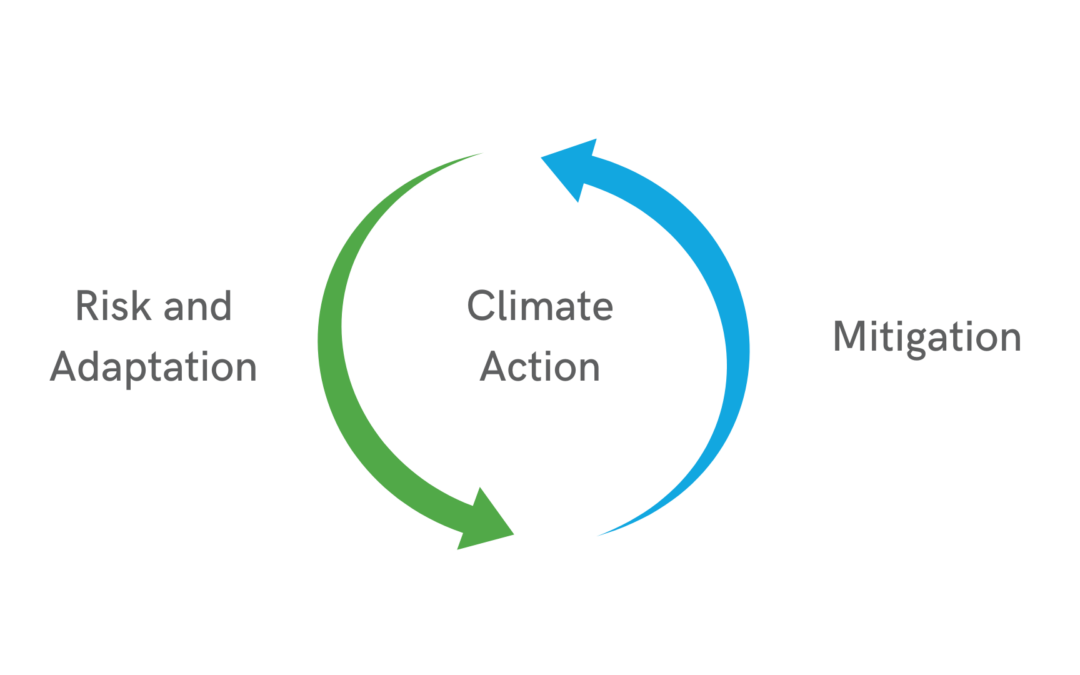
Climate Risk Mitigation: Preparing for the Impacts of El Niño

The specter of El Niño looms large over East Nusa Tenggara (NTT) and, by extension, over Indonesia’s food security. With the Indonesian Meteorology, Climatology, and Geophysics Agency (BMKG) forecasting the continuation of this climatic event into 2024, concerns are rising about its potential to trigger a global food crisis.
El Niño, characterized by warmer-than-average sea surface temperatures in the Pacific Ocean, disrupts typical weather patterns. This disruption can lead to prolonged dry spells in food-exporting nations, impacting the production of essential crops like soy, a crucial ingredient in animal feed. A shortfall in global animal feed production would inevitably ripple through to countries like Indonesia, affecting food availability and prices.
The BMKG’s head, Dwikorita Karnawati, warns of the broader implications of these climatic changes. The ongoing rise in Earth’s surface temperature, which has been consistently breaking records – with July 2023 noted as the hottest July on record – is a clear indicator of these profound shifts. This warming is contributing to global water hotspots or droughts, posing a significant threat to food security.
By mid-century, the indicators for food security in most parts of the world are expected to turn increasingly dire, with regions marked in shades of orange to black, signaling high vulnerability. Indonesia is predicted to fall into the medium vulnerability category (orange). This is particularly alarming as it implies difficulties in importing food from countries experiencing even more severe droughts.
The BMKG, acknowledging these challenges, is intensifying its efforts in climate adaptation training, enhancing climate literacy, and promoting the transition from fossil to non-fossil energy sources. The agency’s observations suggest a sharp, unpredictable trend in climate change, urging all sectors to consider these changes in their planning and infrastructure designs.
The implications for Indonesia’s long-term development plans are profound. The looming threat of a food crisis calls for a concerted effort in mitigating climate change impacts. This includes adopting sustainable practices, reducing dependency on fossil fuels, and enhancing resilience against climate-induced food shortages.
For Yayasan Bambu Lingkungan Lestari (YBLL), actively involved in the Forestry and Other Land Use (FOLU) Net Sink 2030 project in NTT, these developments are a call to action. YBLL recognizes the need to adapt its strategies in response to these risks. The prolonged dry spells could endanger the young seedlings crucial for the project’s goal of reducing greenhouse gas emissions. As such, YBLL is proactively seeking collaborations with strategic stakeholders to secure water supplies, essential for the survival of these plantings.
As the effects of El Niño and the broader impact of climate change become increasingly evident, Indonesia faces a crucial period of adaptation and mitigation. Organizations like YBLL are at the forefront of this effort, demonstrating the importance of foresight and collaboration in addressing these emerging challenges.
Source:
https://www.cnbcindonesia.com/tech/20231203122404-37-494097/bmkg-ungkap-petaka-besar-ini-bayangi-ri-akibat-krisis-iklim
https://www.cnbcindonesia.com/news/20231230011713-4-501421/siaga-bmkg-ungkap-tanda-tanda-petaka-ancam-indonesia-emas


Recent Comments